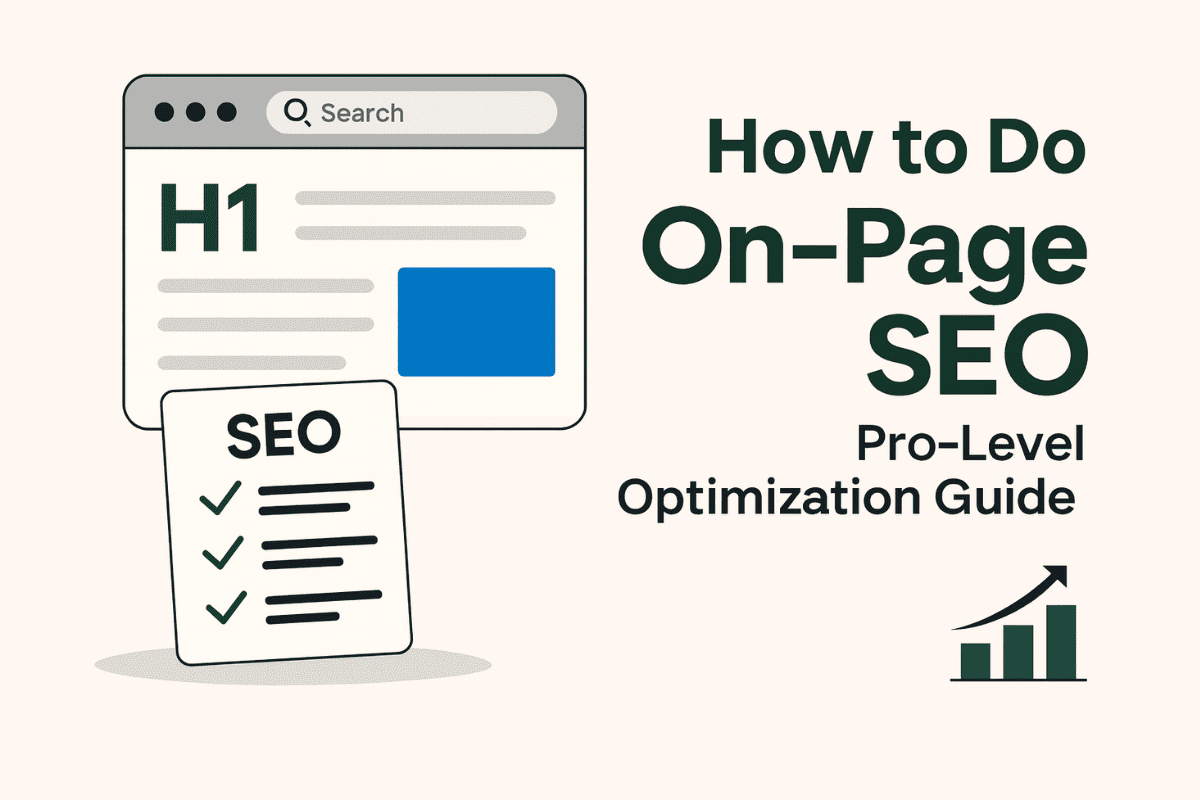
A Comprehensive Guide: How to Do On-Page SEO Like a Pro
In today’s competitive digital landscape, simply having a website is not enough. If your pages are not optimized for search engines, users, and AI-driven answers, you will struggle to gain consistent visibility.
On-page SEO is the foundation of sustainable organic growth. It helps search engines understand your content, improves user experience, and increases your chances of ranking in Google Search, featured snippets, and AI-powered results.
This comprehensive guide explains how to do on-page SEO like a pro, using modern, 2025-ready best practices aligned with SEO + AEO (Answer Engine Optimization).
What Is On-Page SEO?
On-page SEO refers to optimizing the content and HTML elements of a webpage so that search engines can easily understand its topic, relevance, and value. It focuses entirely on elements you can control on your website.
On-page SEO includes:
- Keyword and search intent optimization
- Titles, meta descriptions, and headings
- Content structure and internal linking
- Image optimization
- Page experience (speed, mobile usability, readability)
When done correctly, on-page SEO improves rankings, click-through rates, and user engagement.
Why On-Page SEO Matters in 2025
Search engines have evolved beyond keyword matching. Google now prioritizes:
- Helpful, intent-focused content
- Clear structure and topical depth
- Fast, mobile-friendly experiences
- Well-organized internal linking
- Direct answers for AI and voice search
Without strong on-page SEO, even high-quality backlinks or ads will not deliver consistent results.
Step-by-Step: How to Do On-Page SEO Like a Pro
1. Start With Search Intent–Driven Keyword Research
Professional on-page SEO starts with understanding why users search, not just what they search.
Instead of targeting one keyword, group keywords by intent:
- Informational (how, what, why)
- Commercial (best, comparison, services)
- Transactional (hire, pricing, agency)
Use tools like Google Search Console, Ahrefs, SEMrush, or Keyword Planner to identify keywords with:
- Clear intent
- Reasonable competition
- Long-tail variations
👉 For businesses targeting leads, combining keyword research with Local SEO and service intent is critical. (See: Rank Easy SEO Services)
2. Optimize Title Tags for Clicks and Rankings
Your title tag is one of the strongest on-page ranking factors.
Best practices:
- Keep titles under 60 characters
- Place the primary keyword naturally
- Make it compelling for humans, not just search engines
Example:
How to Do On-Page SEO Like a Pro (Step-by-Step Guide)
Avoid keyword stuffing and generic titles that do not encourage clicks.
3. Write Meta Descriptions That Improve CTR
Meta descriptions do not directly impact rankings, but they strongly influence click-through rate (CTR).
Best practices:
- Keep them under 155–160 characters
- Clearly explain the page value
- Match the search intent
A strong CTR sends positive engagement signals to Google.
4. Structure Content Using Proper Headings (H1–H3)
Headings help both users and search engines understand your content hierarchy.
Rules to follow:
- One H1 per page (main topic)
- Use H2s for primary sections
- Use H3s for supporting points
Well-structured headings also improve readability and increase the chances of appearing in featured snippets.
5. Create High-Quality, Helpful Content
Content remains the most important on-page SEO factor.
To optimize content like a professional:
- Fully answer the user’s question
- Use simple, clear language
- Add examples, lists, and short paragraphs
- Cover related subtopics (semantic SEO)
Avoid thin content written only for keywords. Google rewards pages that demonstrate real expertise and usefulness.
👉 If content creation is part of your growth strategy, combining it with content marketing and SEO services delivers the best ROI.
6. Optimize URLs for Clarity and Relevance
SEO-friendly URLs are:
- Short
- Descriptive
- Keyword-focused
Good example:/on-page-seo-guide/
Avoid unnecessary numbers, dates, or random strings.
7. Optimize Images for SEO and Performance
Images improve engagement, but only if optimized correctly.
Best practices:
- Use descriptive file names
- Add meaningful alt text
- Compress images to reduce load time
Image optimization improves accessibility, page speed, and image search visibility.
8. Strengthen Internal Linking
Internal linking is one of the most underrated on-page SEO techniques.
Benefits:
- Improves crawlability
- Distributes link equity
- Guides users to related pages
Link relevant blog content to:
- SEO service pages
- Local SEO pages
- High-value resources
👉 Strategic internal linking supports SEO services for businesses and helps convert informational traffic into leads.
9. Optimize for Mobile and Page Speed
Google uses mobile-first indexing, meaning your mobile version matters most.
Key optimizations:
- Responsive design
- Fast loading pages
- Minimal layout shifts
- Optimized Core Web Vitals
Page speed is a confirmed ranking factor and a major UX signal.
10. Optimize for AEO (AI & Voice Search)
Modern on-page SEO must support AI-generated answers and voice search.
To do this:
- Answer questions clearly and concisely
- Add FAQ sections
- Use structured headings
- Avoid fluff
This increases your visibility in featured snippets, AI overviews, and voice search results.
How to Measure On-Page SEO Success
After optimization, monitor performance using:
- Google Search Console (impressions, CTR, indexing)
- Google Analytics (engagement, conversions)
- Rank tracking tools
Key metrics to track:
- Organic traffic growth
- Keyword ranking improvements
- Time on page
- Conversion actions
SEO is iterative. Regular audits and updates are essential.
Conclusion
Mastering on-page SEO is not about tricks or shortcuts. It is about creating well-structured, helpful, and search-intent–aligned content that serves users and search engines equally.
By following these professional on-page SEO practices, you build a strong foundation for rankings, authority, and long-term organic growth.
If you want expert help implementing these strategies at scale, explore Rank Easy’s SEO services designed for sustainable, data-driven growth.